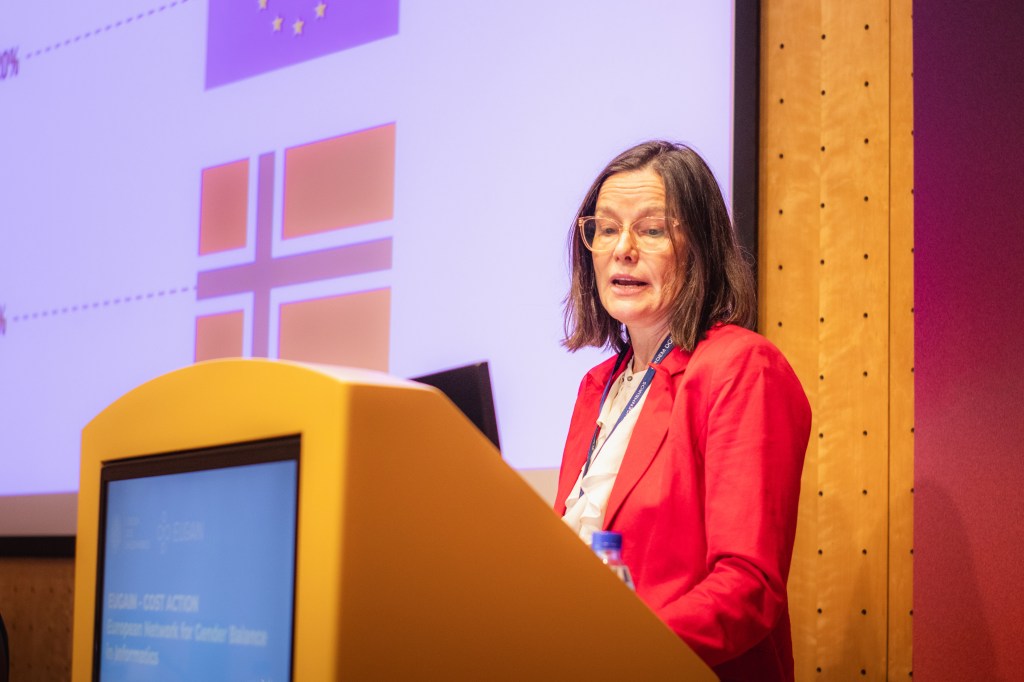

It’s 1989. I’m a normal Italian young woman, 24 years old, and I arrive in Trondheim for the first time. I’ll spend six months here. The Department of Computer Science has four professors, men, Norwegian, about the same age, and educated at the same university. The students in the software engineering group are male.
Then it’s 1997. Another 24-year-old arrives in Trondheim to start his PhD, it is Heri. I’m 32 now, coming back as an associate professor, wife, and soon-to-be mother. The percentage of female students in Computer Science is 6%. But something is changing — the ADA project begins, thanks to the wonderful ideas and hard work of pioneers like my beloved supervisor, Professor Reidar Conradi. They understand that diversity matters in computer science.
In 2002, the Norwegian government assigns ten positions to ten female professors — and I’m one of them. Yes, I’m a quota professor, and I’m proud of it.
It’s 2015. For the first time, the percentage of female students reaches around 30%. But I suddenly realize that only 13% of professors are women. In 2019, the IDUN project starts.
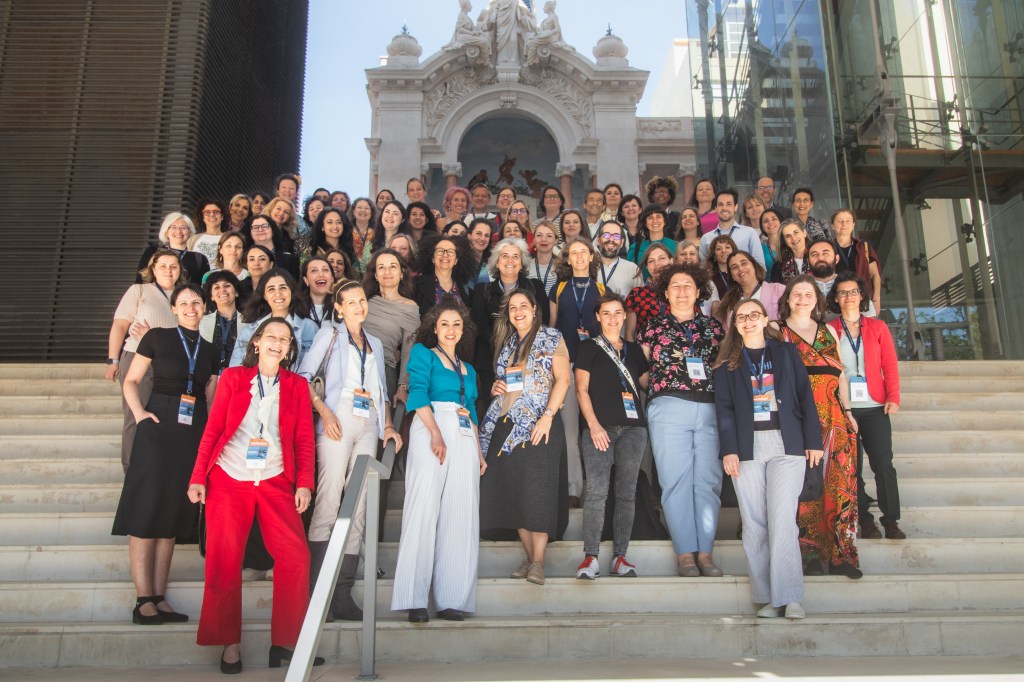
Around that time, I join the board of Informatics Europe. Together with Cristina and Enrico, we establish the EUGAIN project — a new wave of collaboration across Europe to reflect, connect, and strengthen all the efforts made to support women in computing and to go from interventions to research.
As you can read on the EUGAIN website — or even in the nomination text — we’ve carried out many initiatives at different levels: from schools to universities to industry. These efforts are built on information campaigns, role models, and, yes, quotas.
Now it’s 2025. The average percentage of female students in computer science across Europe is still only about 20%. And the diversity campaigns are banned from American companies. We still have a lot of work to understand and to do — maybe more than ever.
The AI wave is reshaping computer science. How will this impact diversity?
Through my research, I’ve come to understand intersectionality. I see now that while we’ve made progress for women in computing — and at NTNU we’ve achieved almost gender balance — we’ve done much less to address diversity of class, disability, religion, nationality, and, not least, Indigenous identity in countries like Norway. And as AI enters everyone’s lives, we’re still mostly speaking to computer scientists, who make up such a small fraction of the population. That is why we started our NGO, AINCLUSION to which this prize is devoted.
It’s been a long and sometimes hard journey — but it’s also been full of friendship. I want to thank everyone in this room. Without Informatics Europe, we wouldn’t have EUGAIN, and NTNU wouldn’t have this prize.
I want to thank all my students, all the EUGAINers. And finally, I want to honor the memory of Bara Buhnova — a brilliant mind and a wonderful friend.


Leave a comment